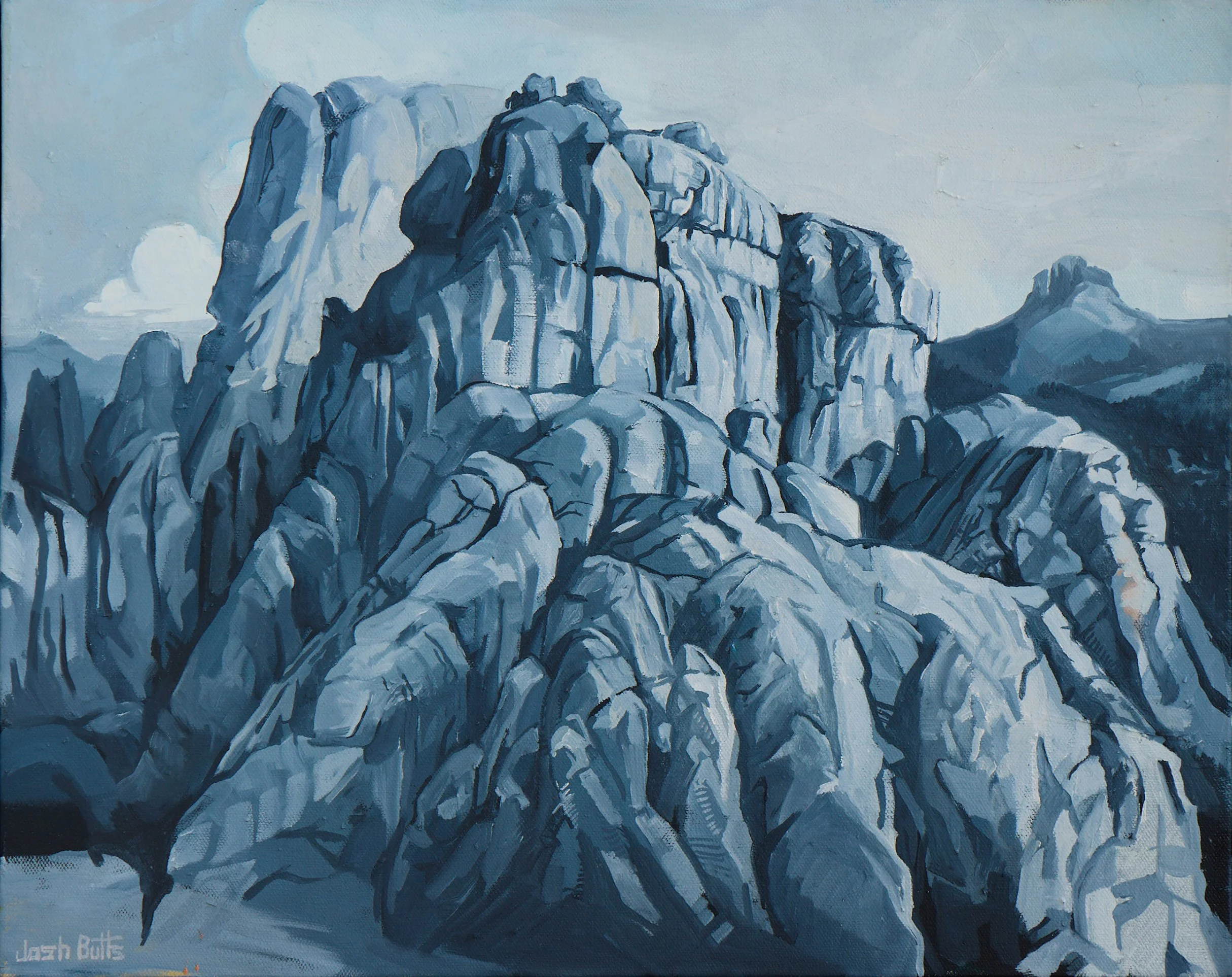
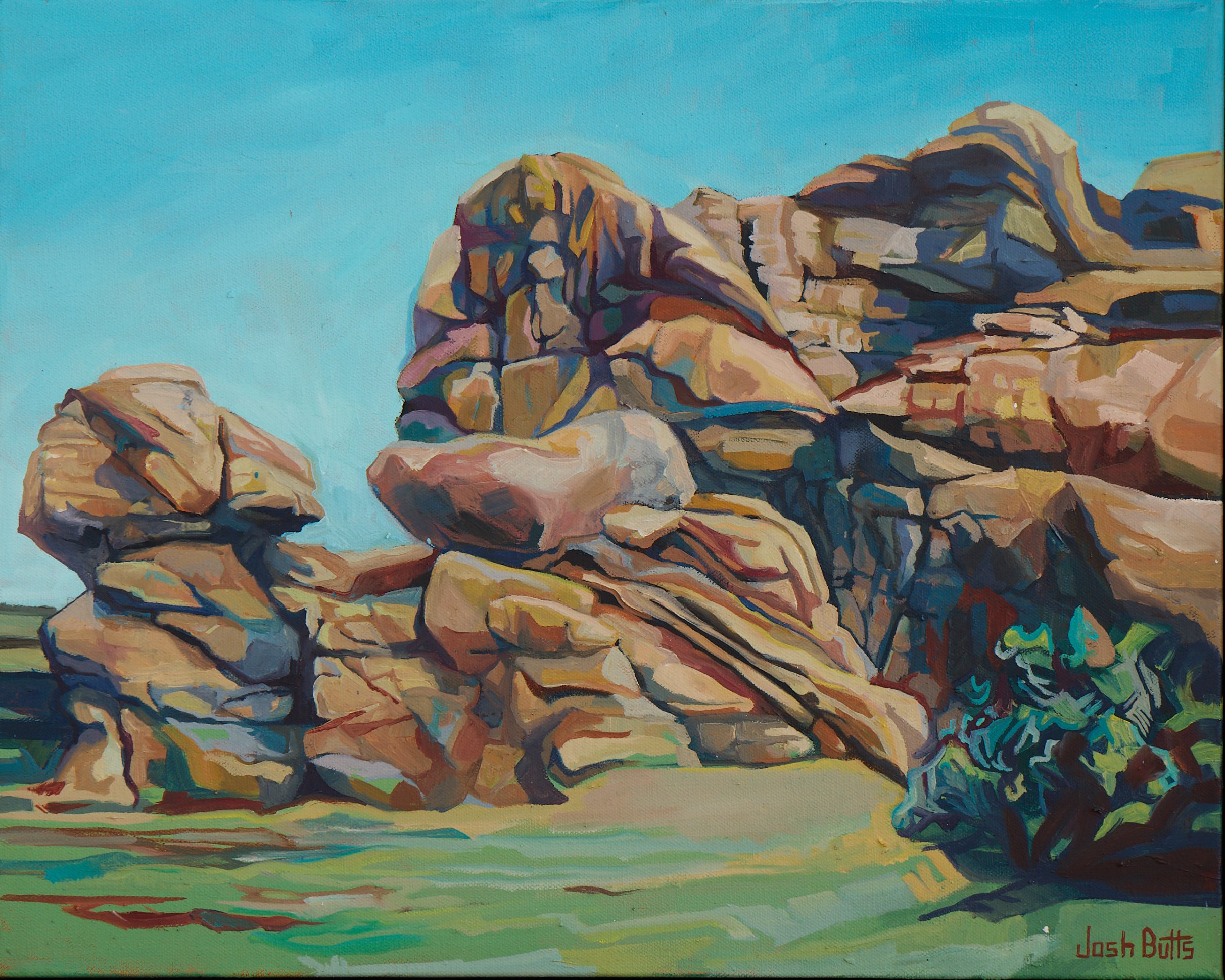
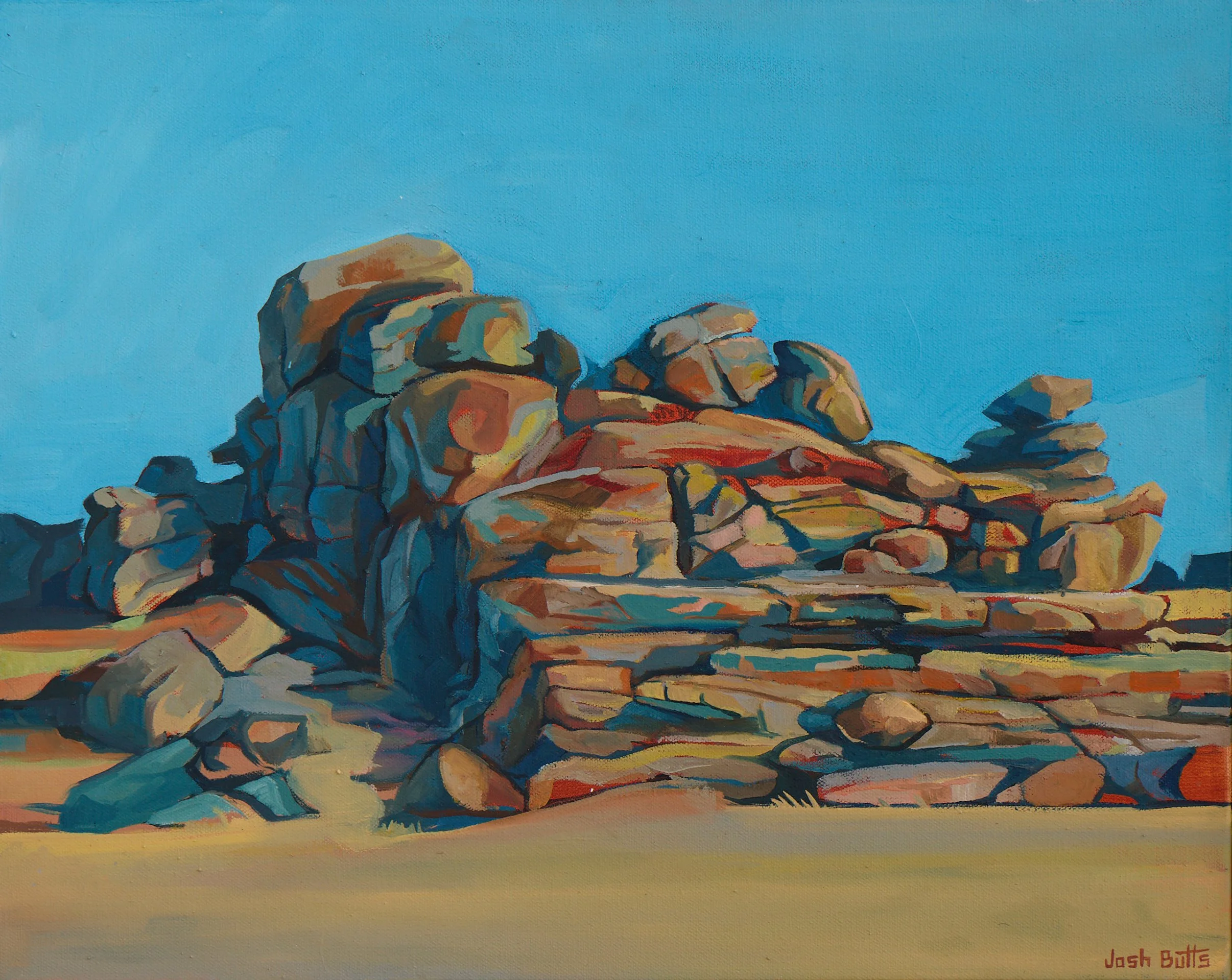
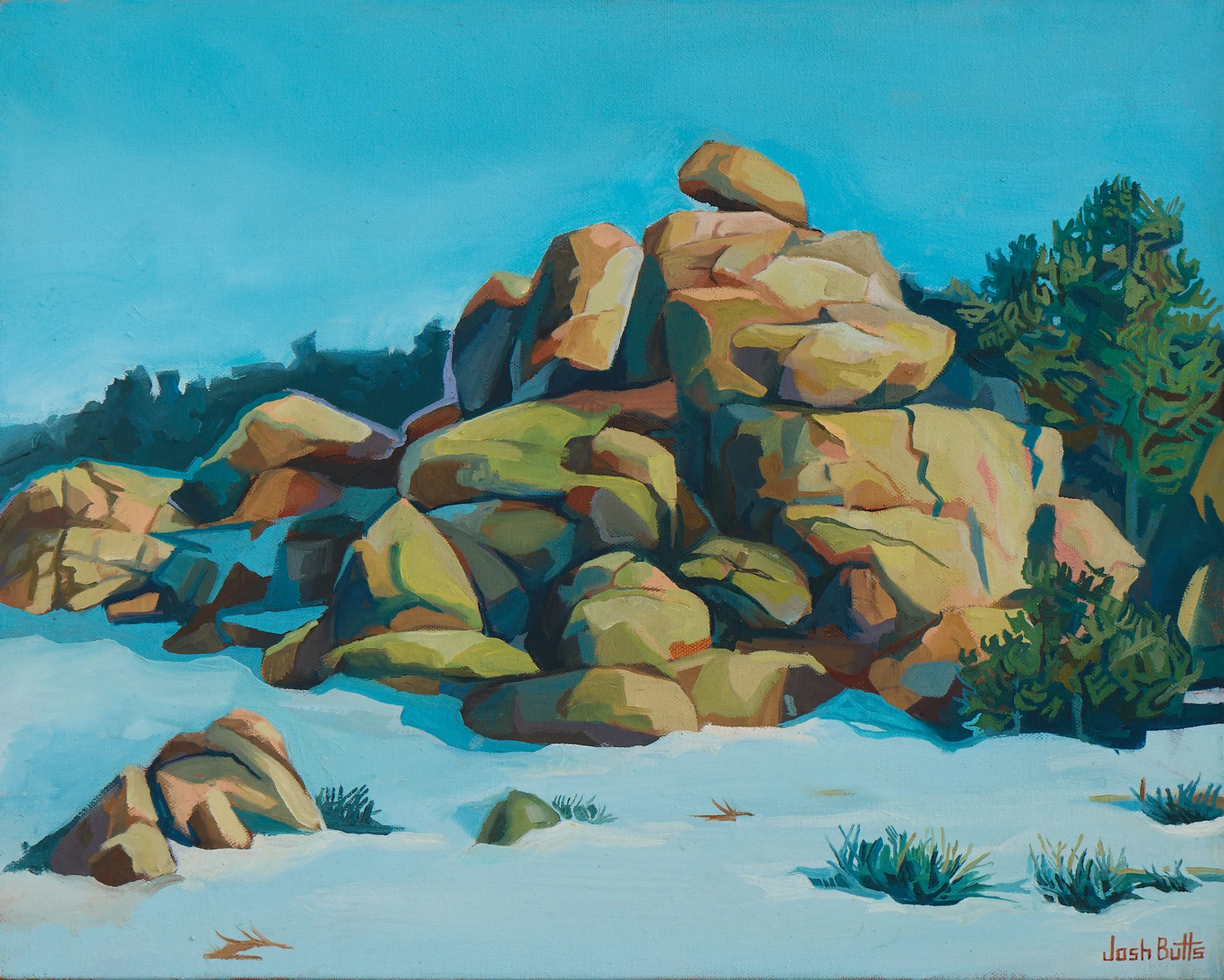
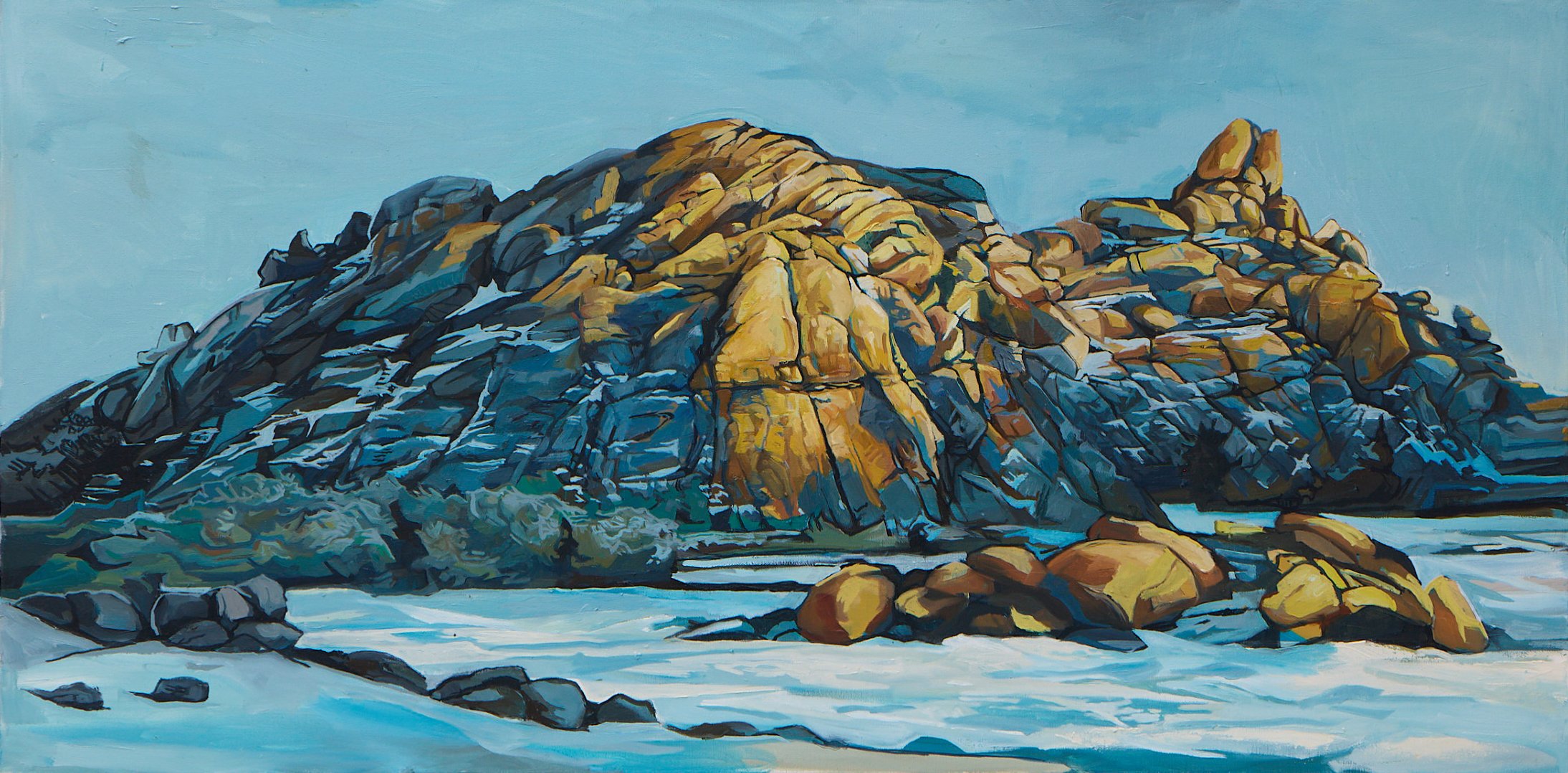
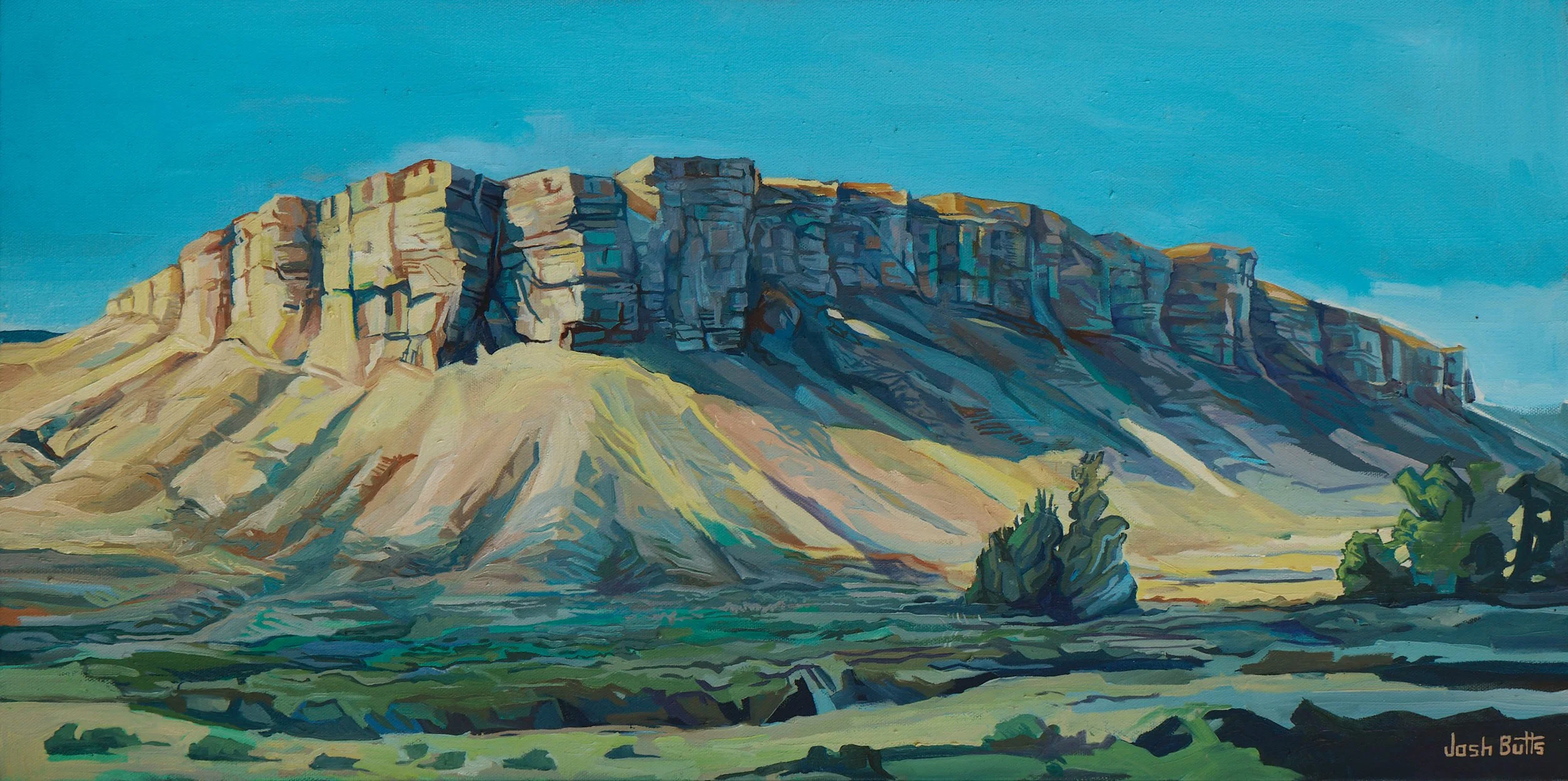
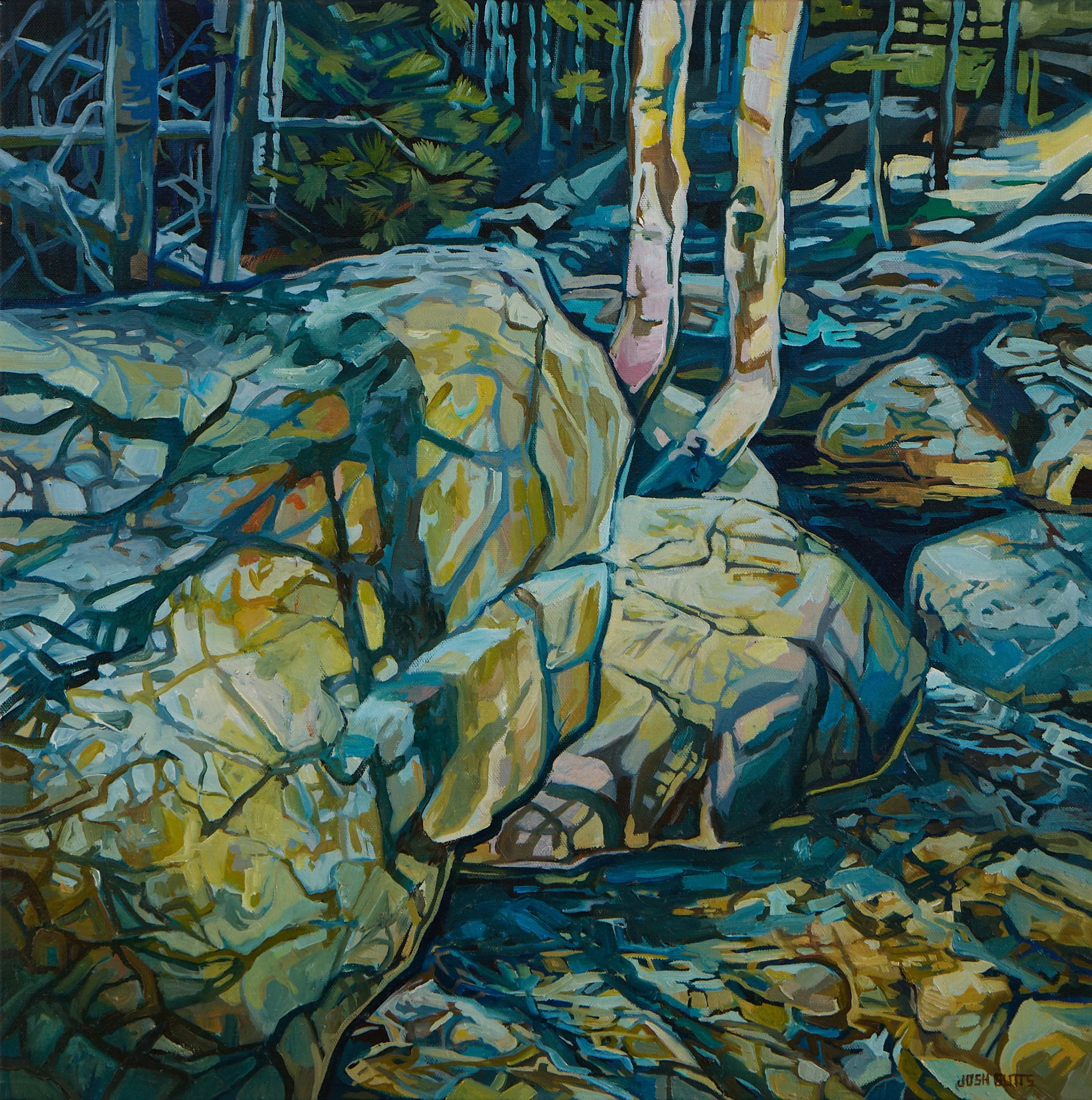
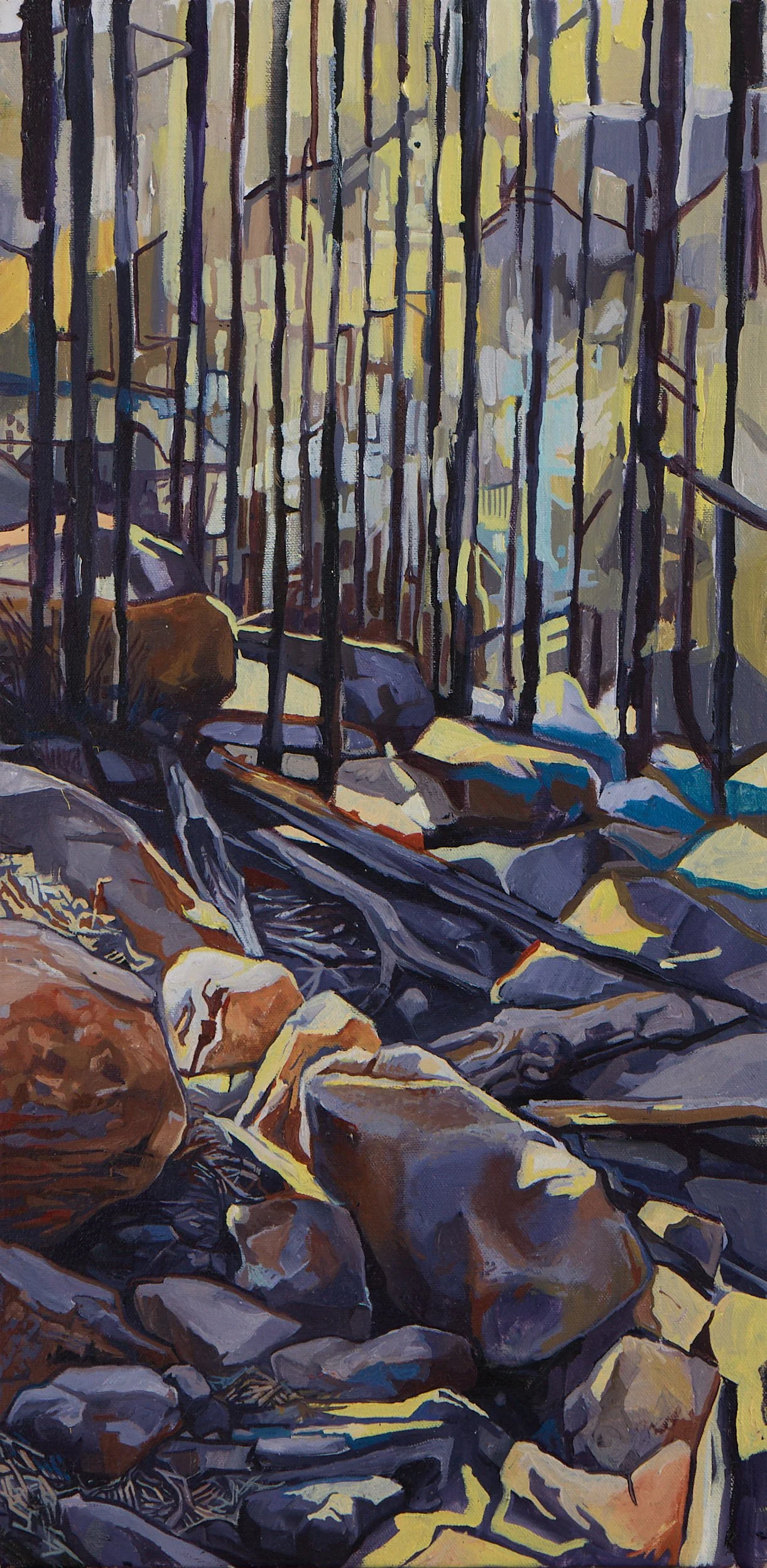
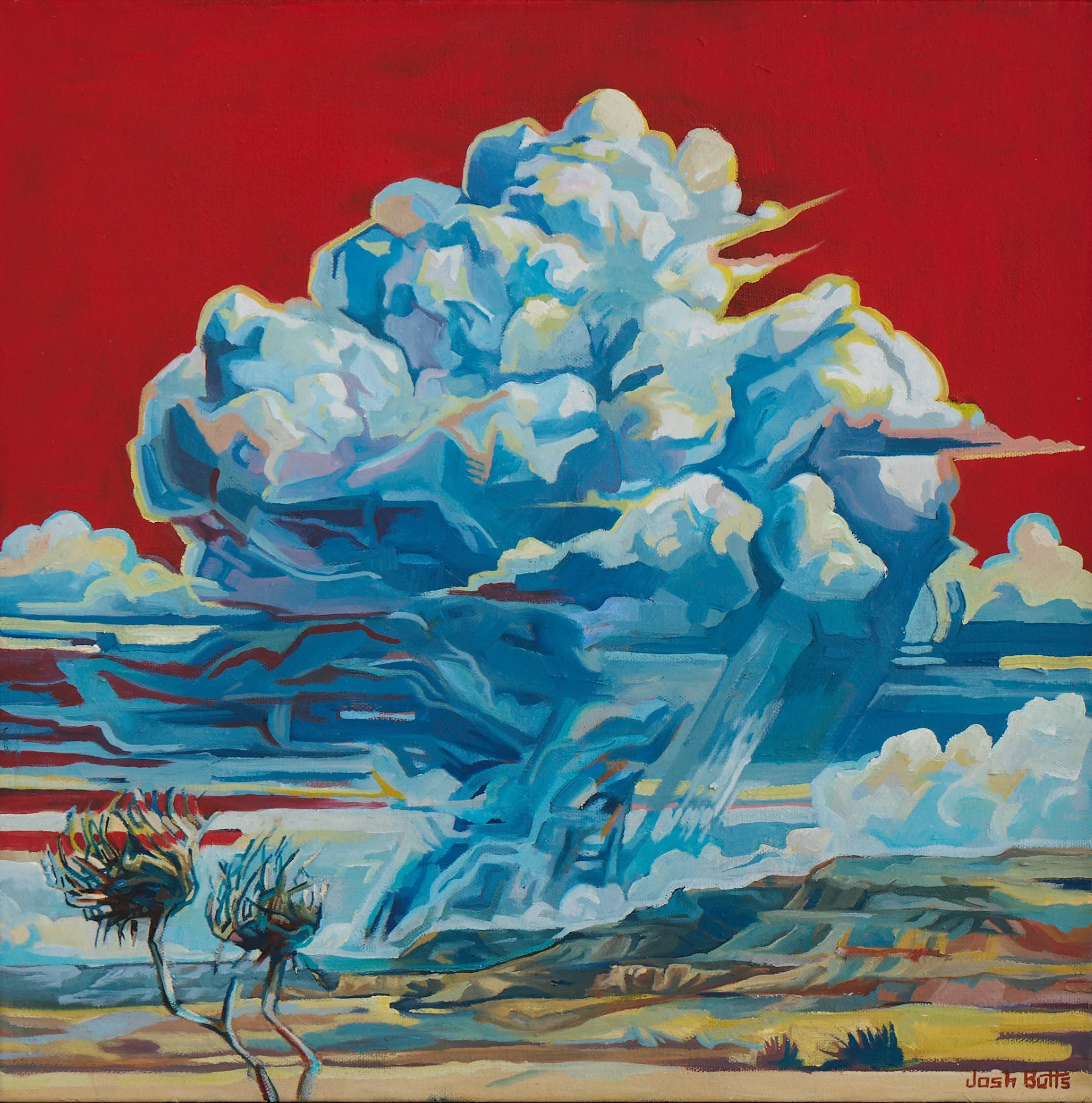
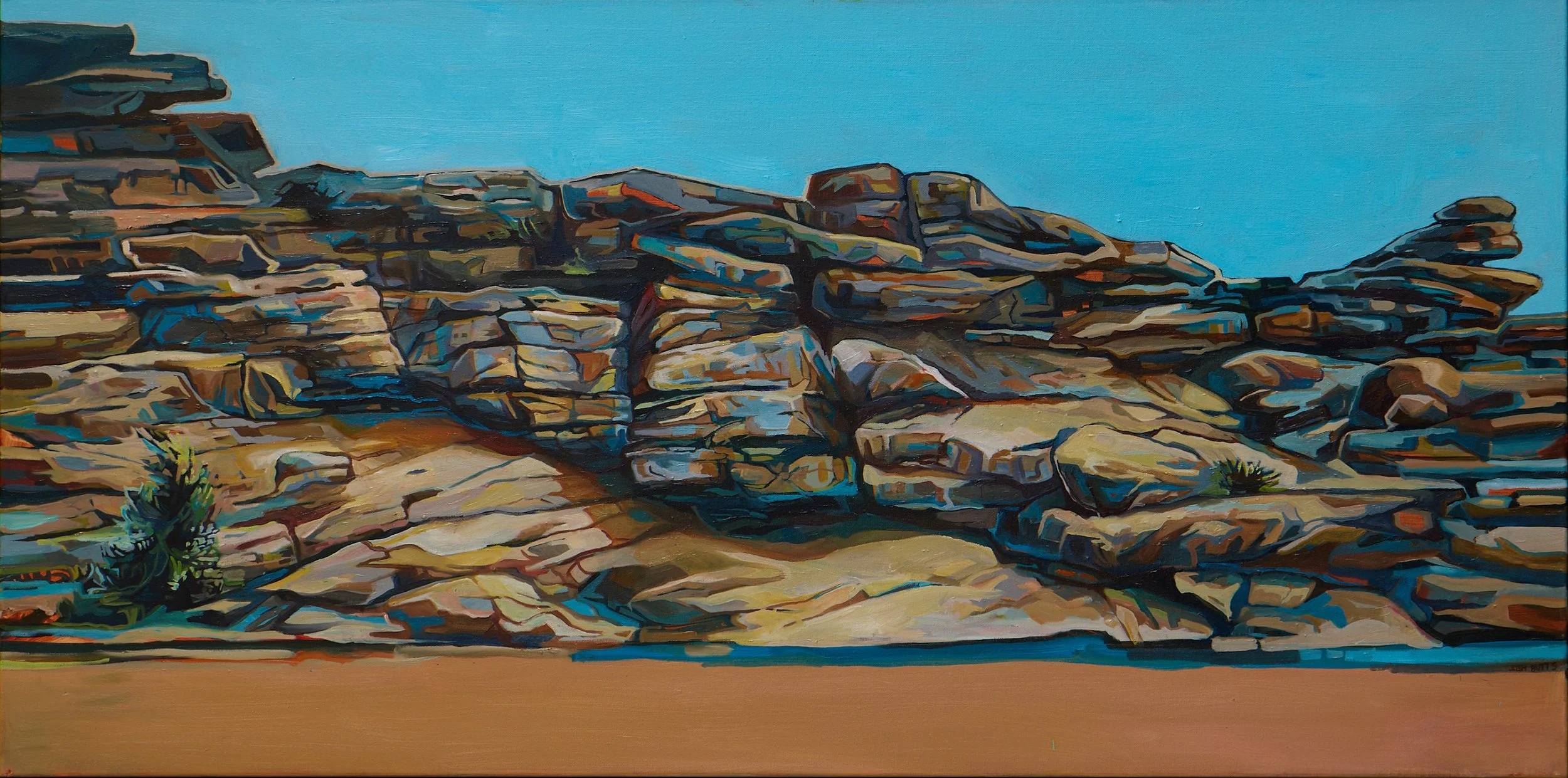
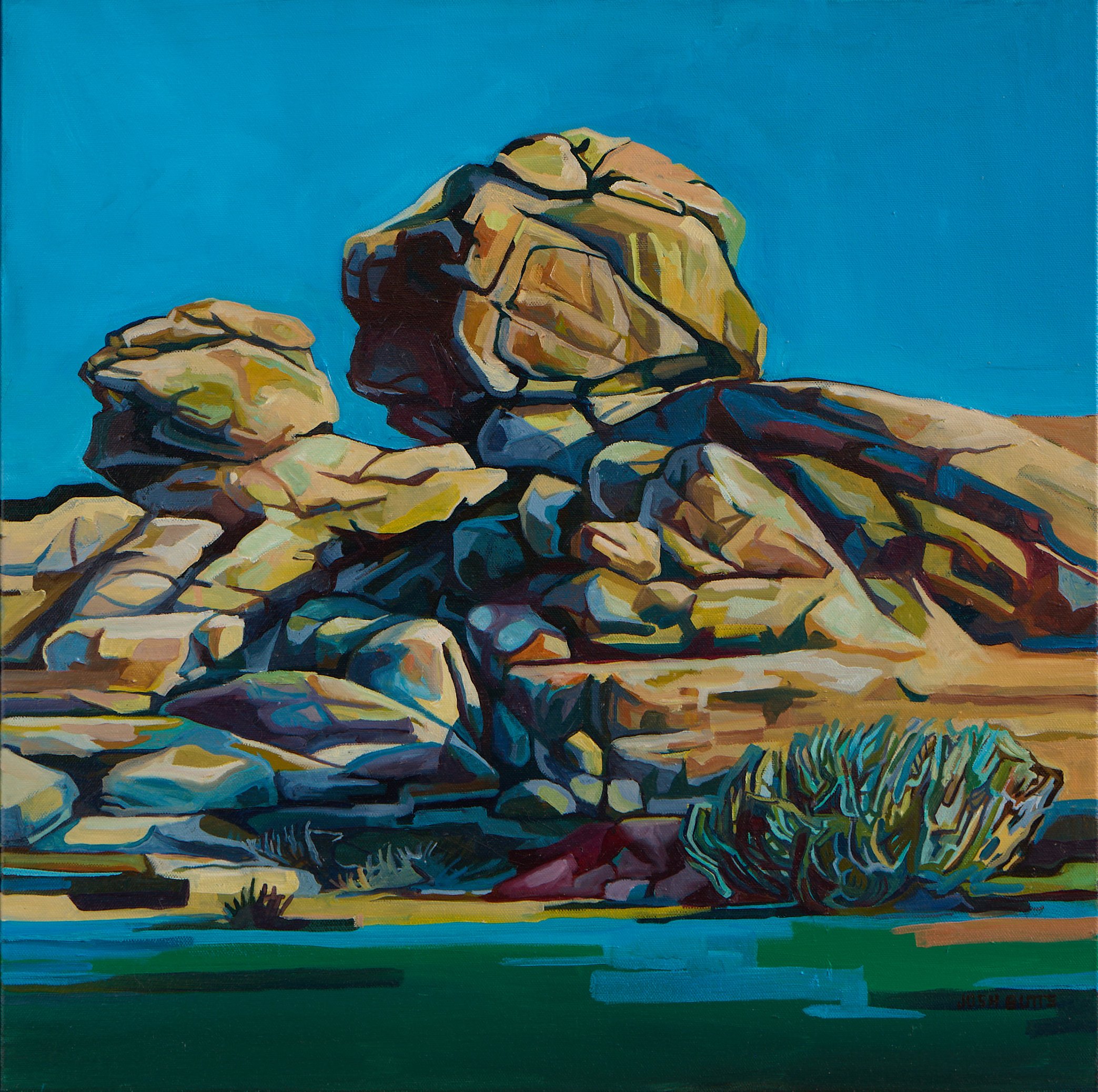
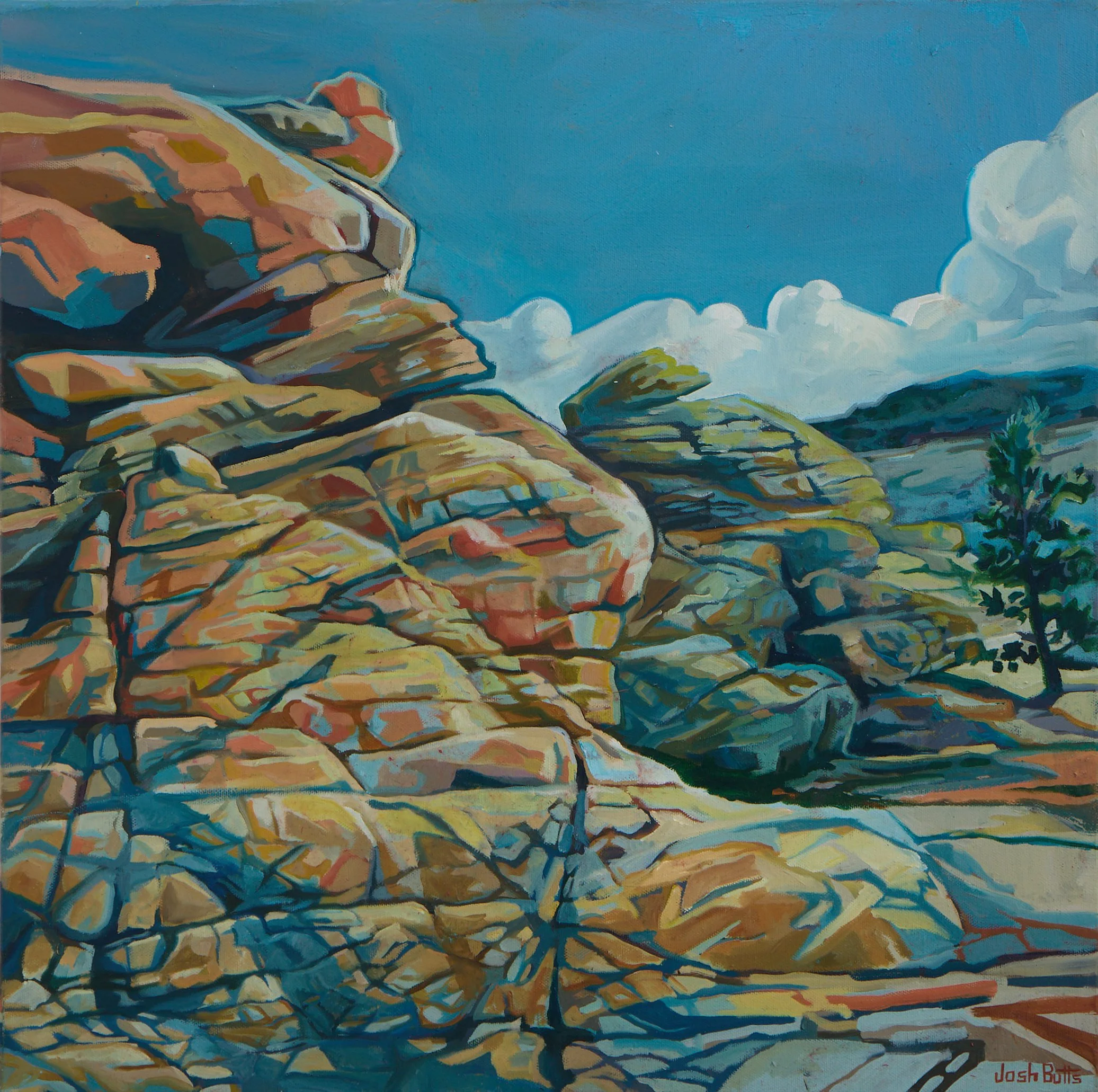
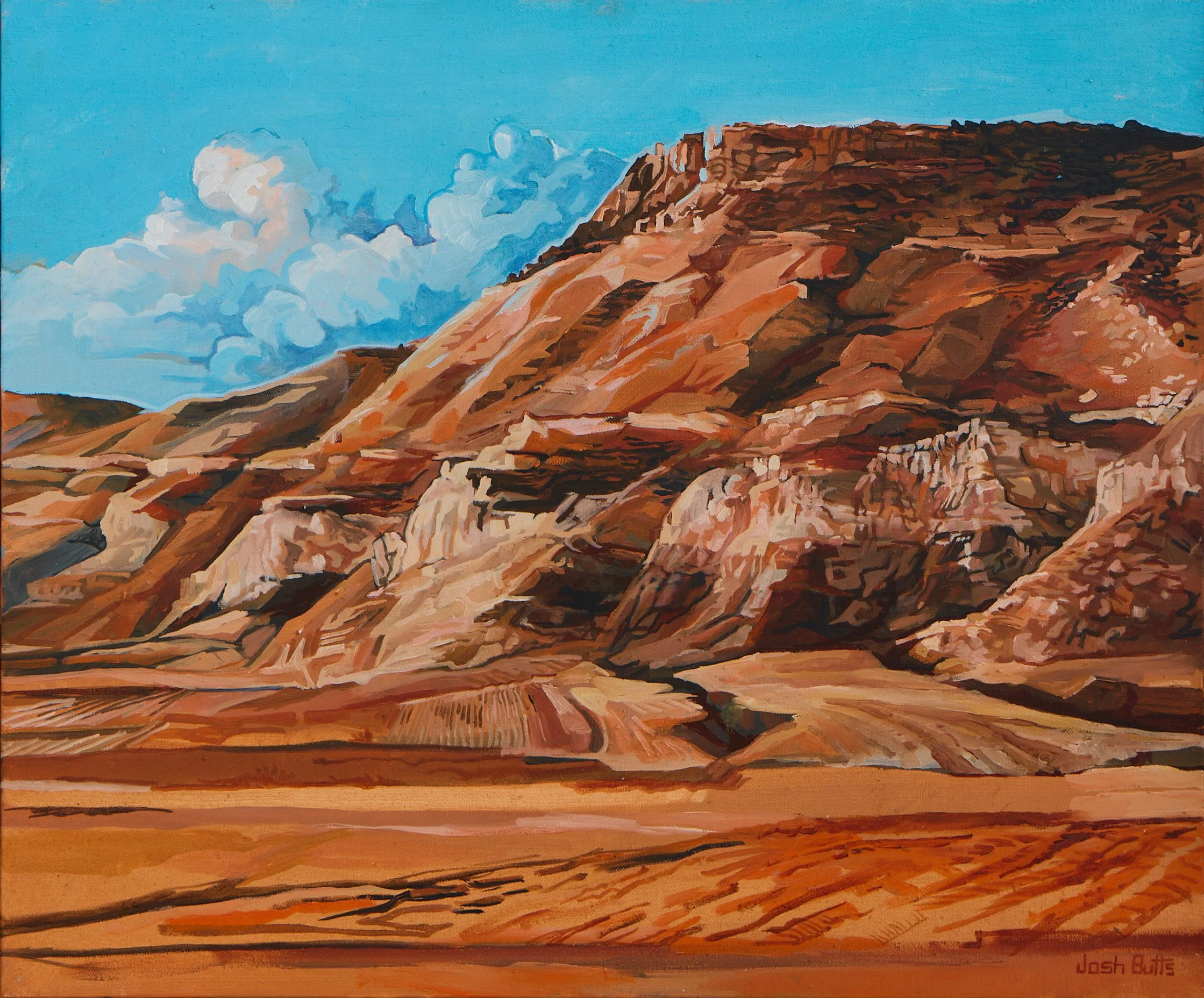
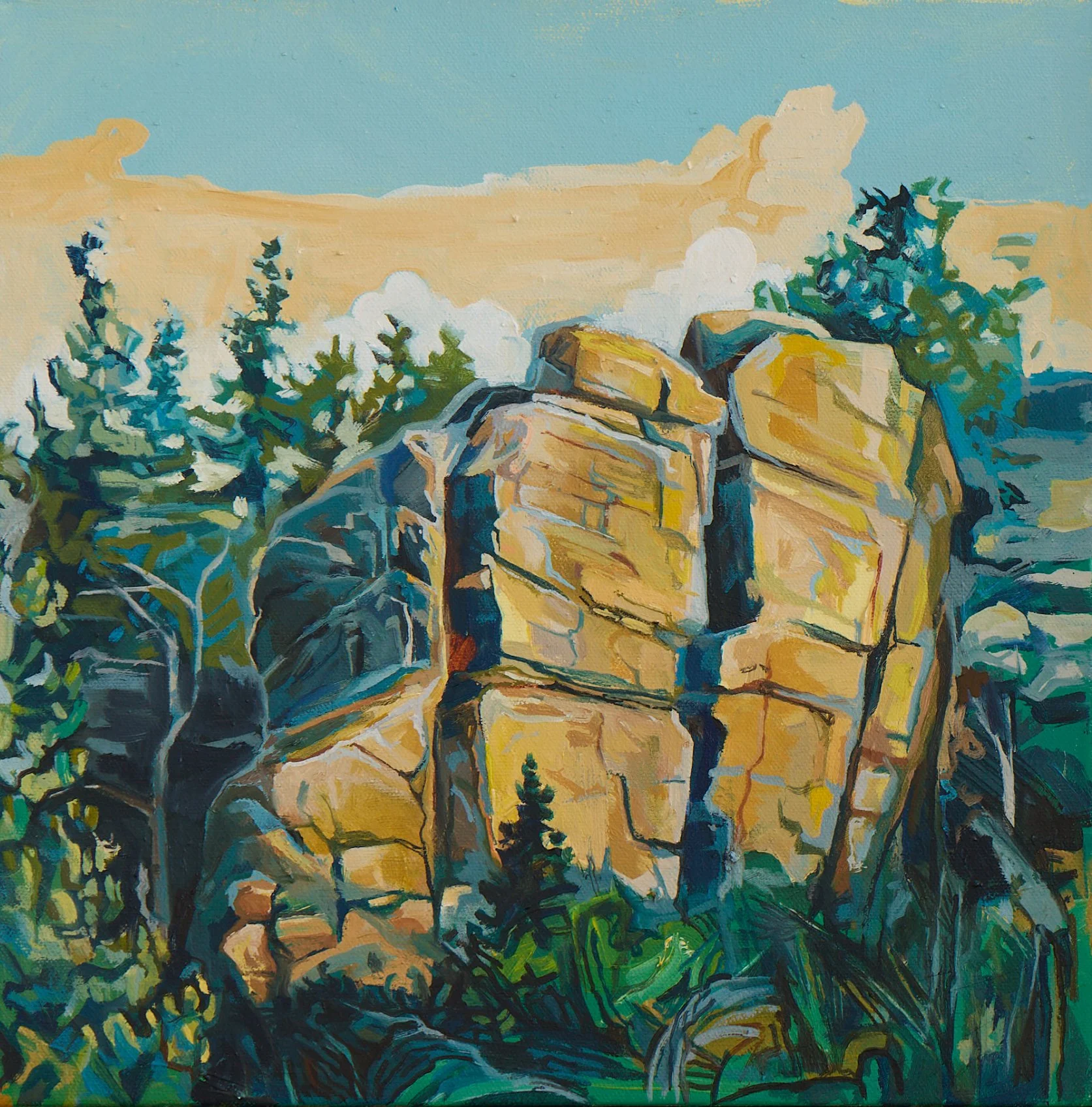
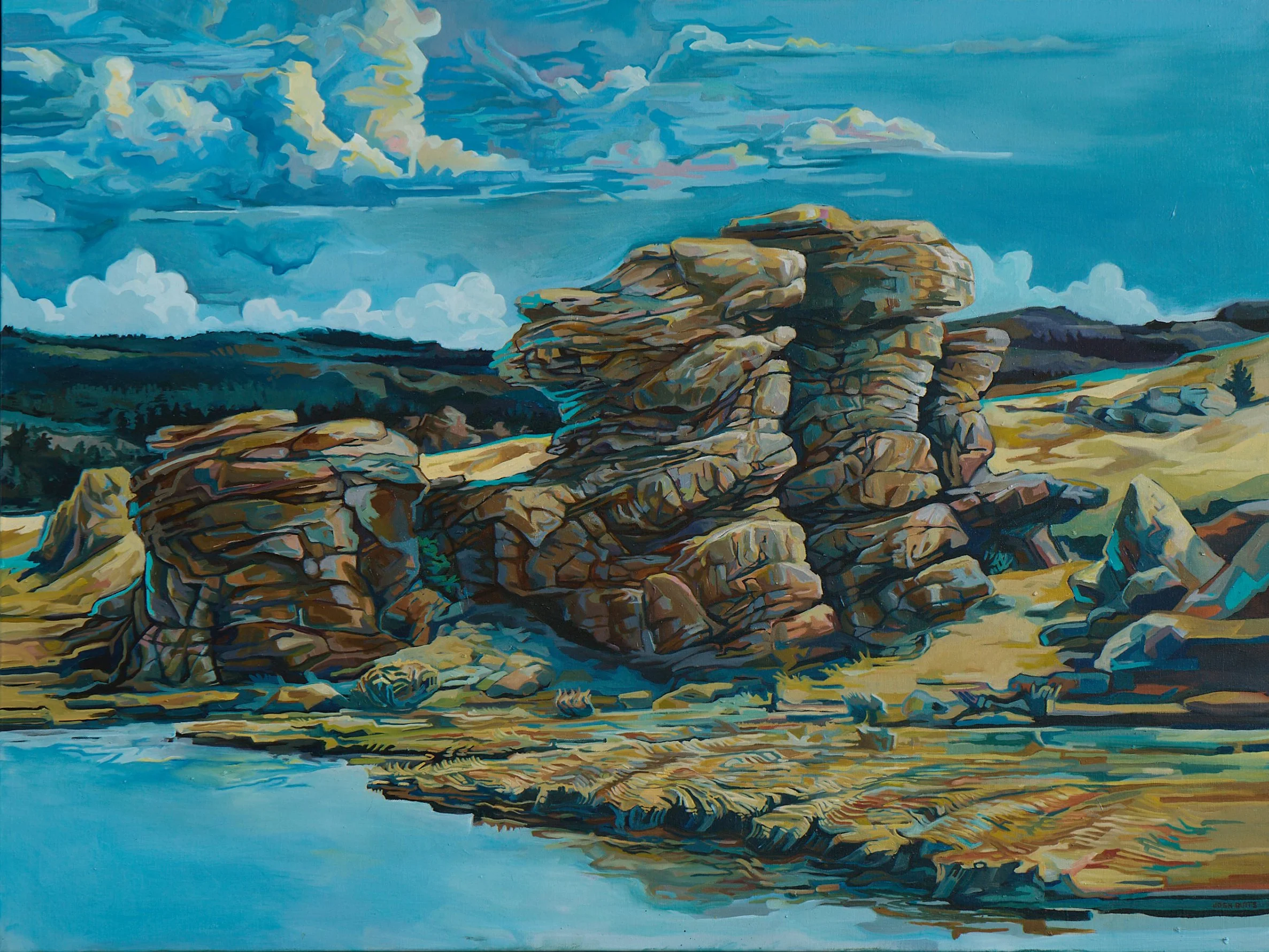
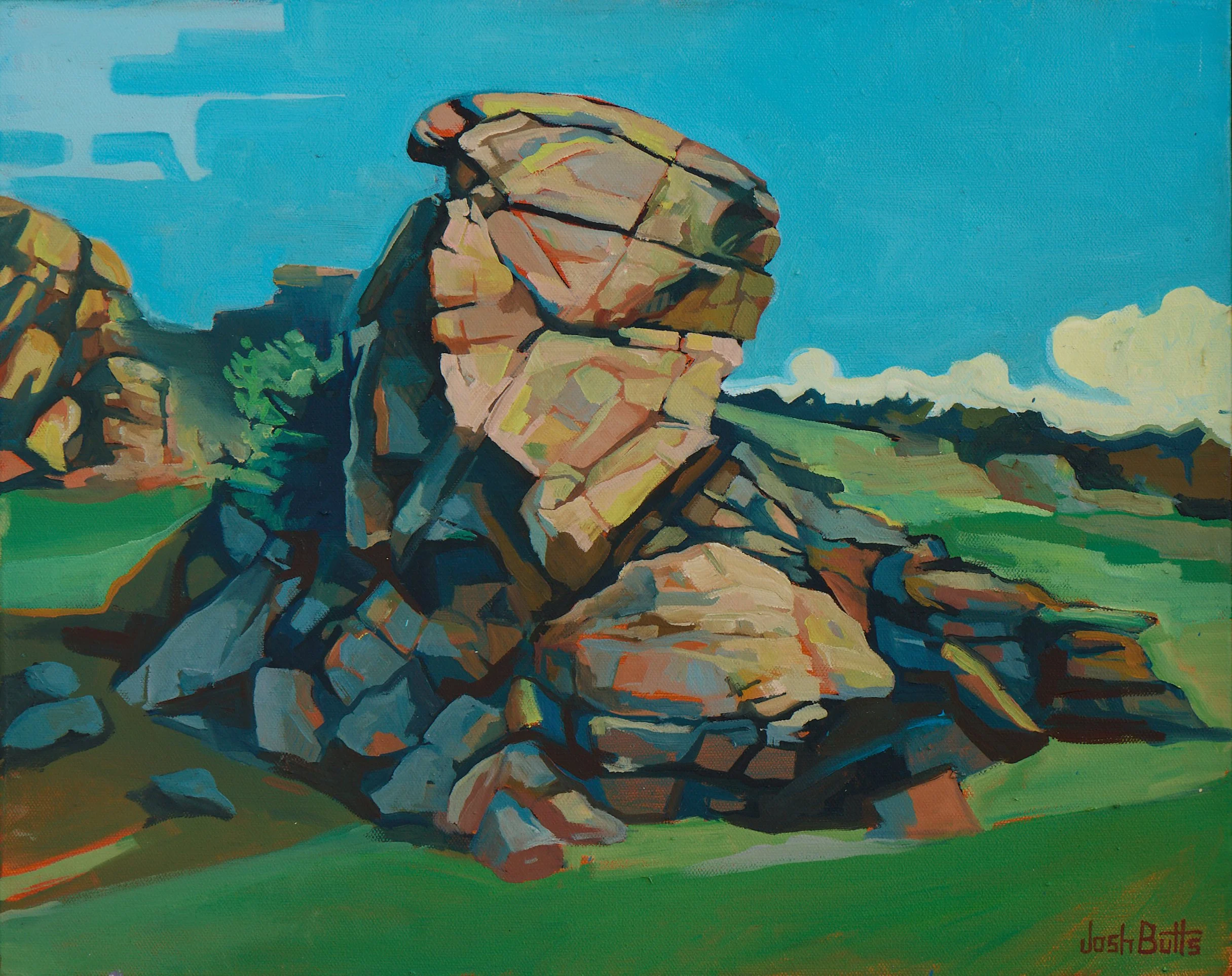
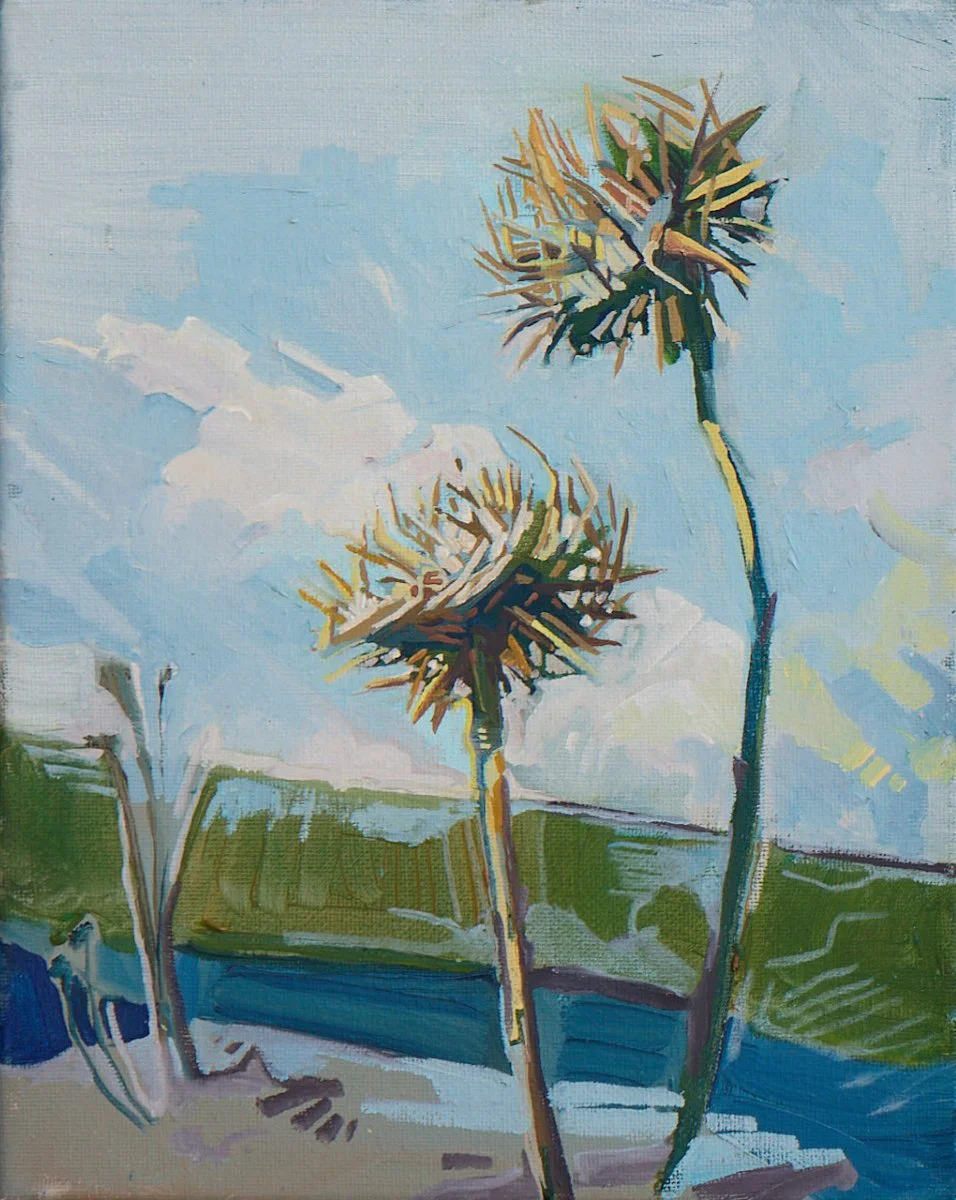
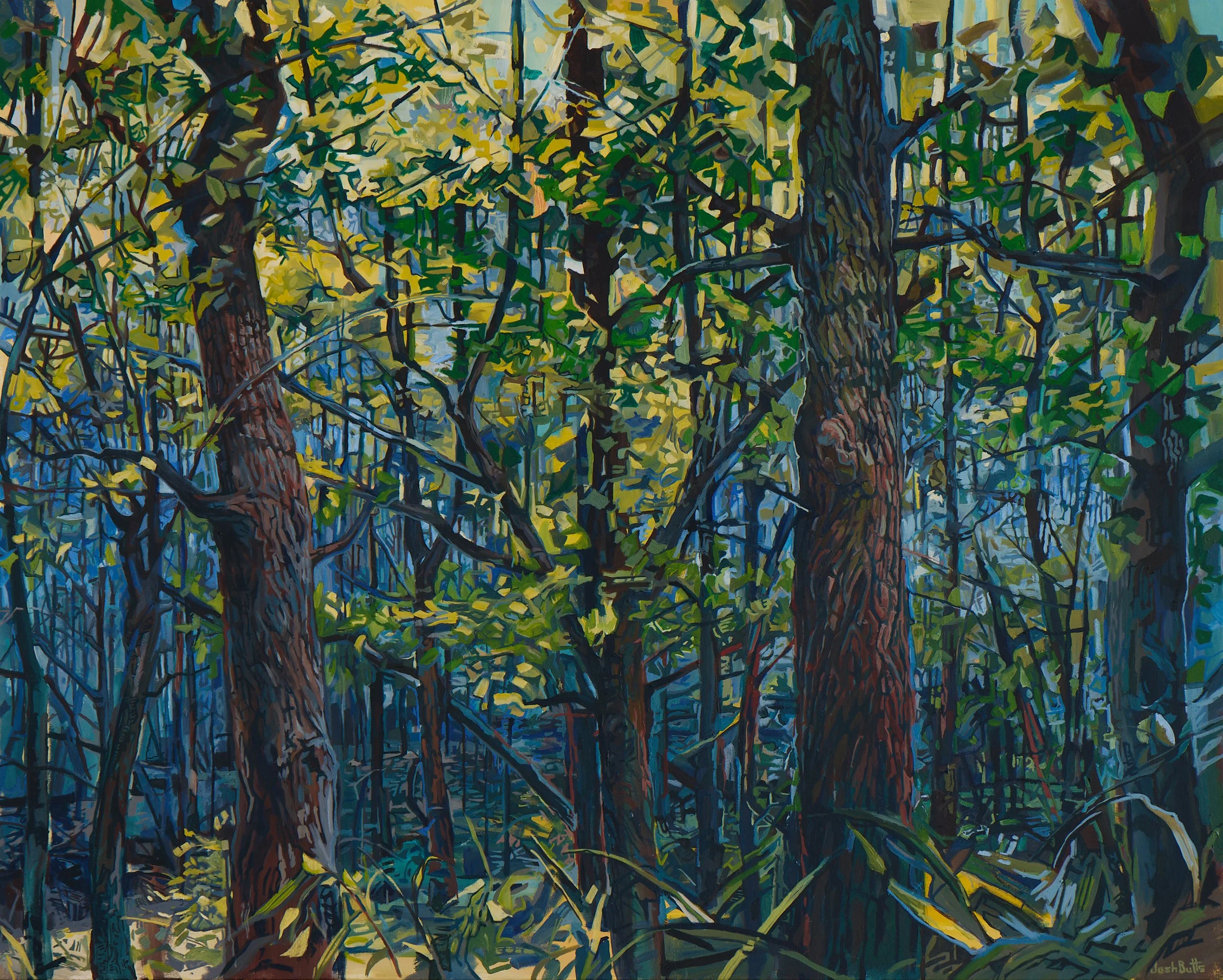
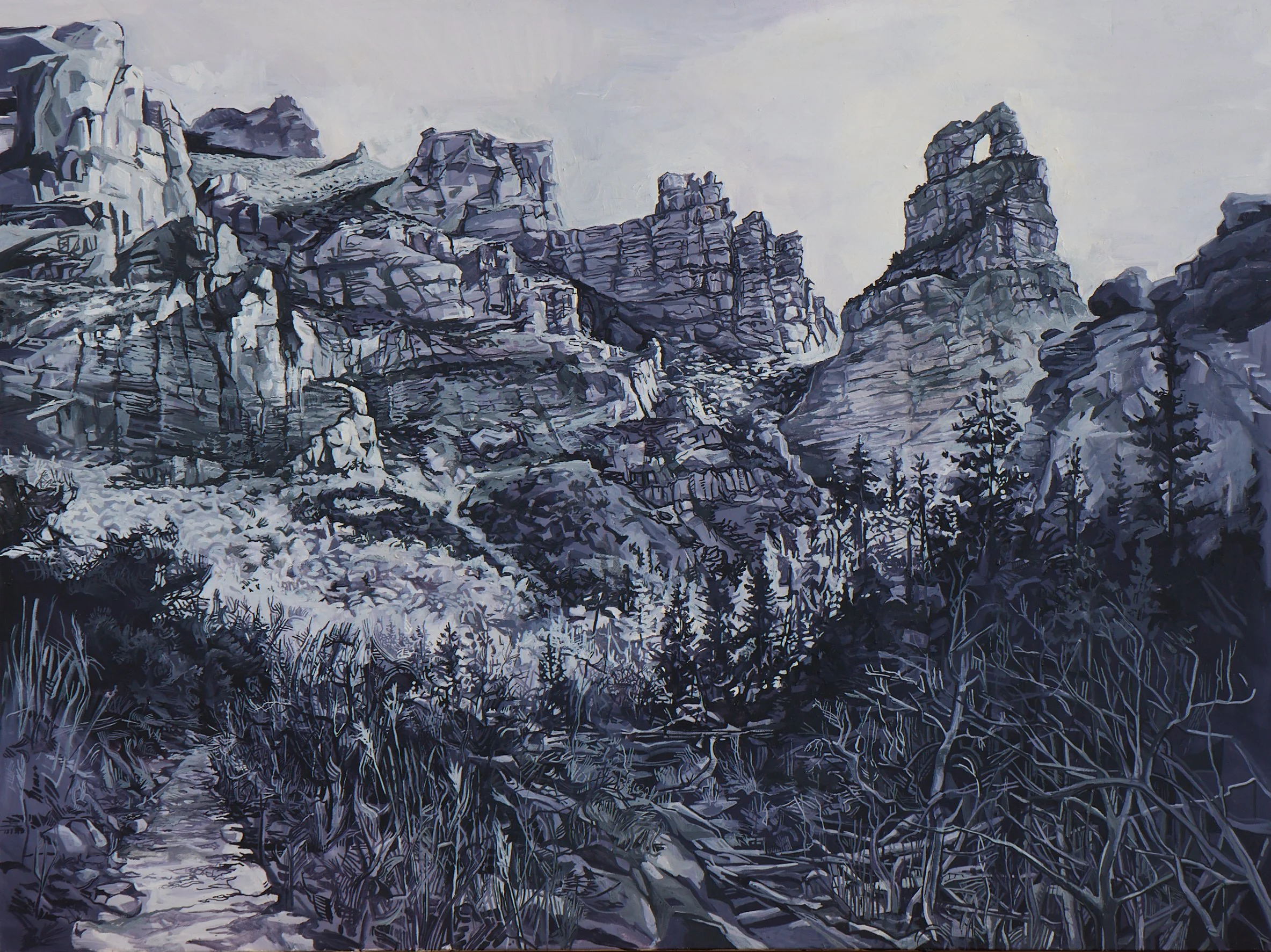
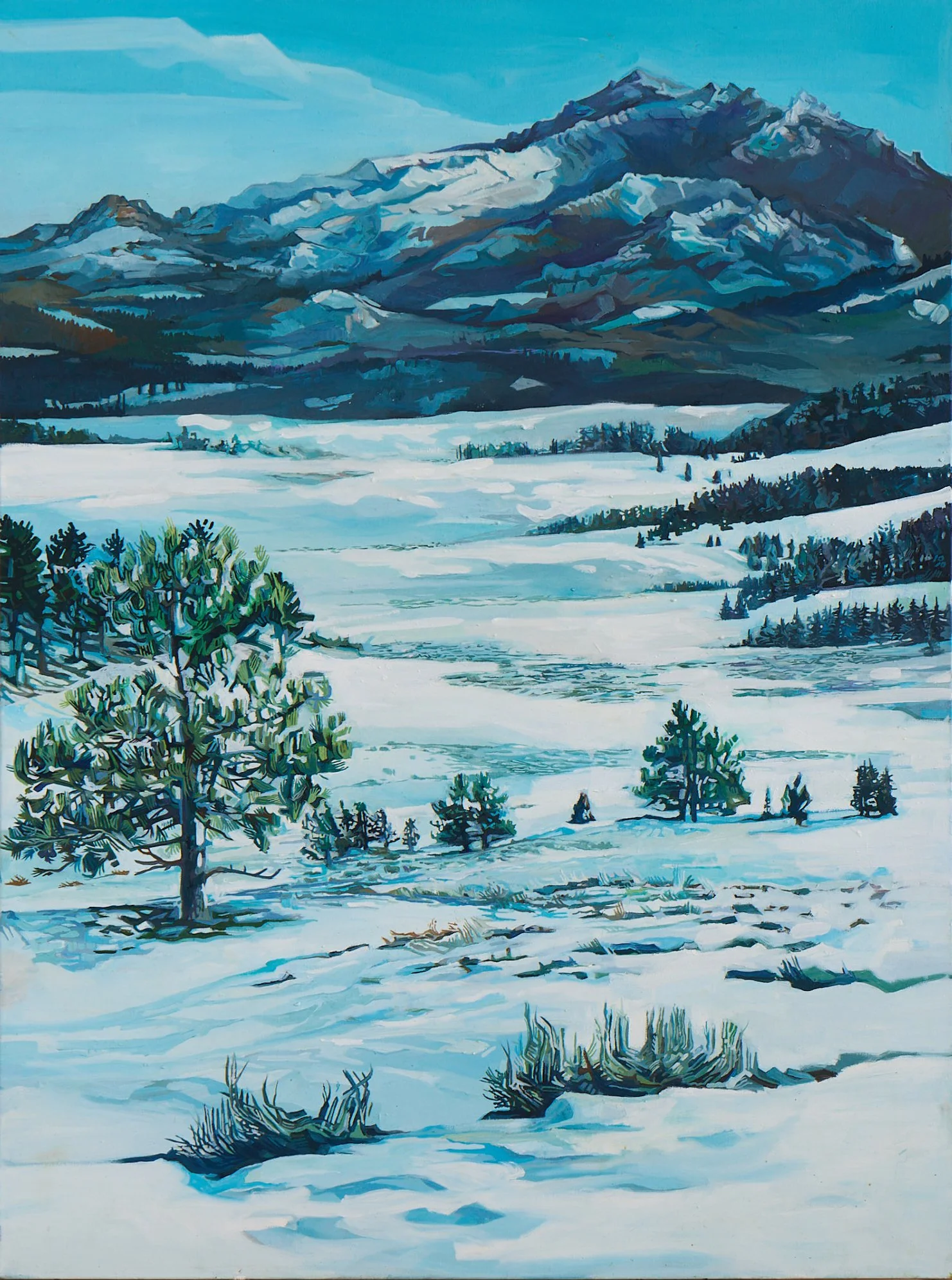
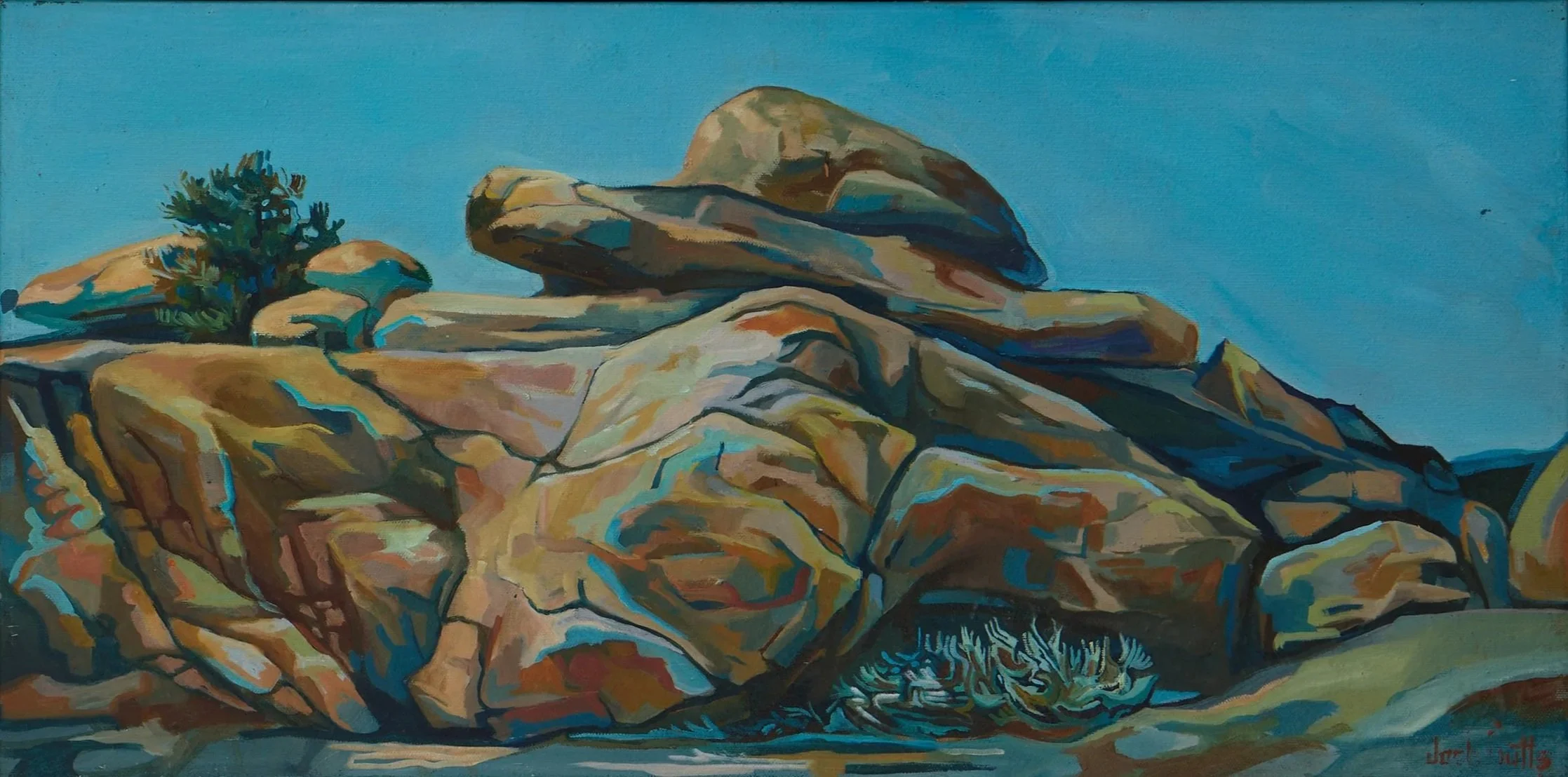
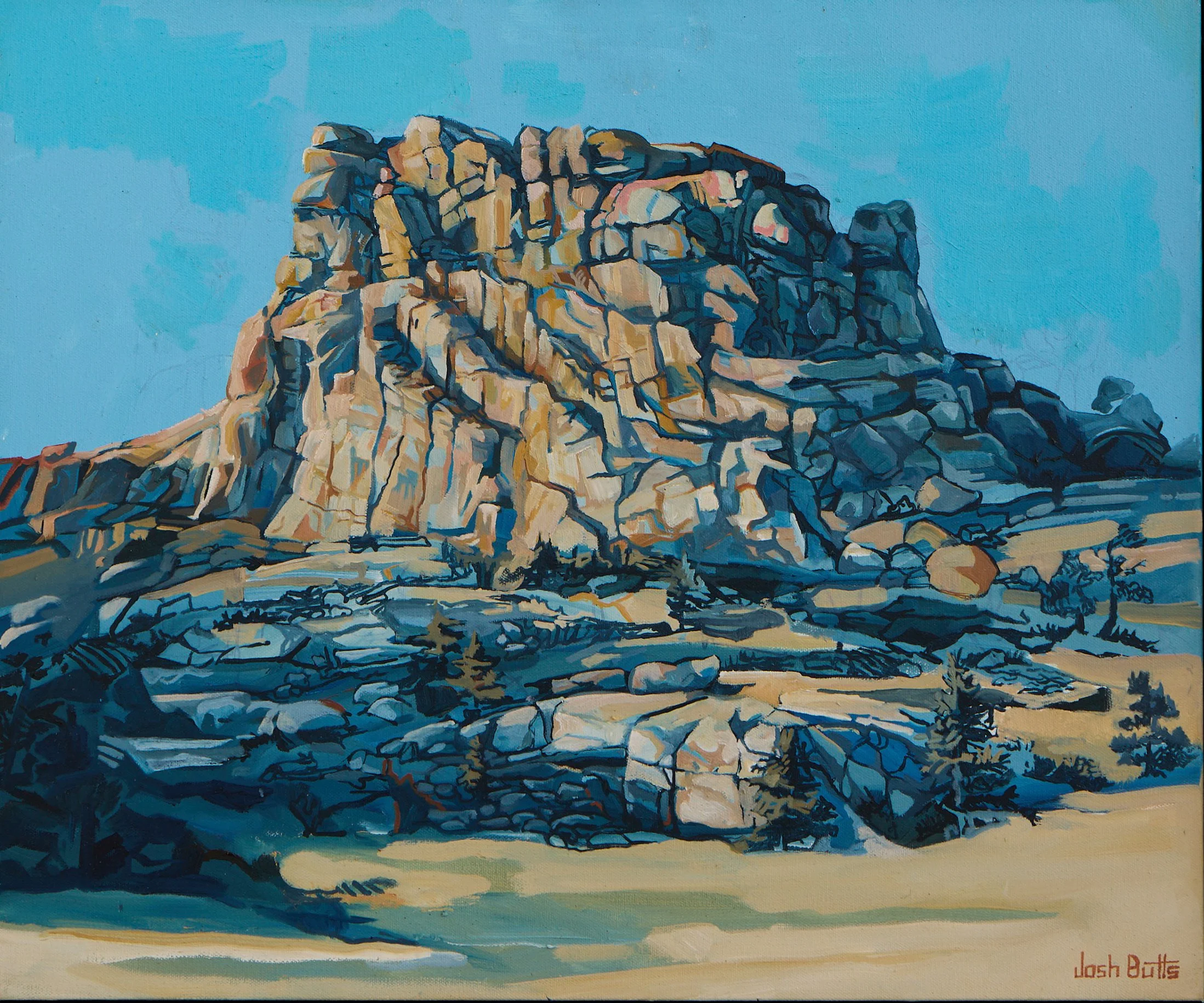
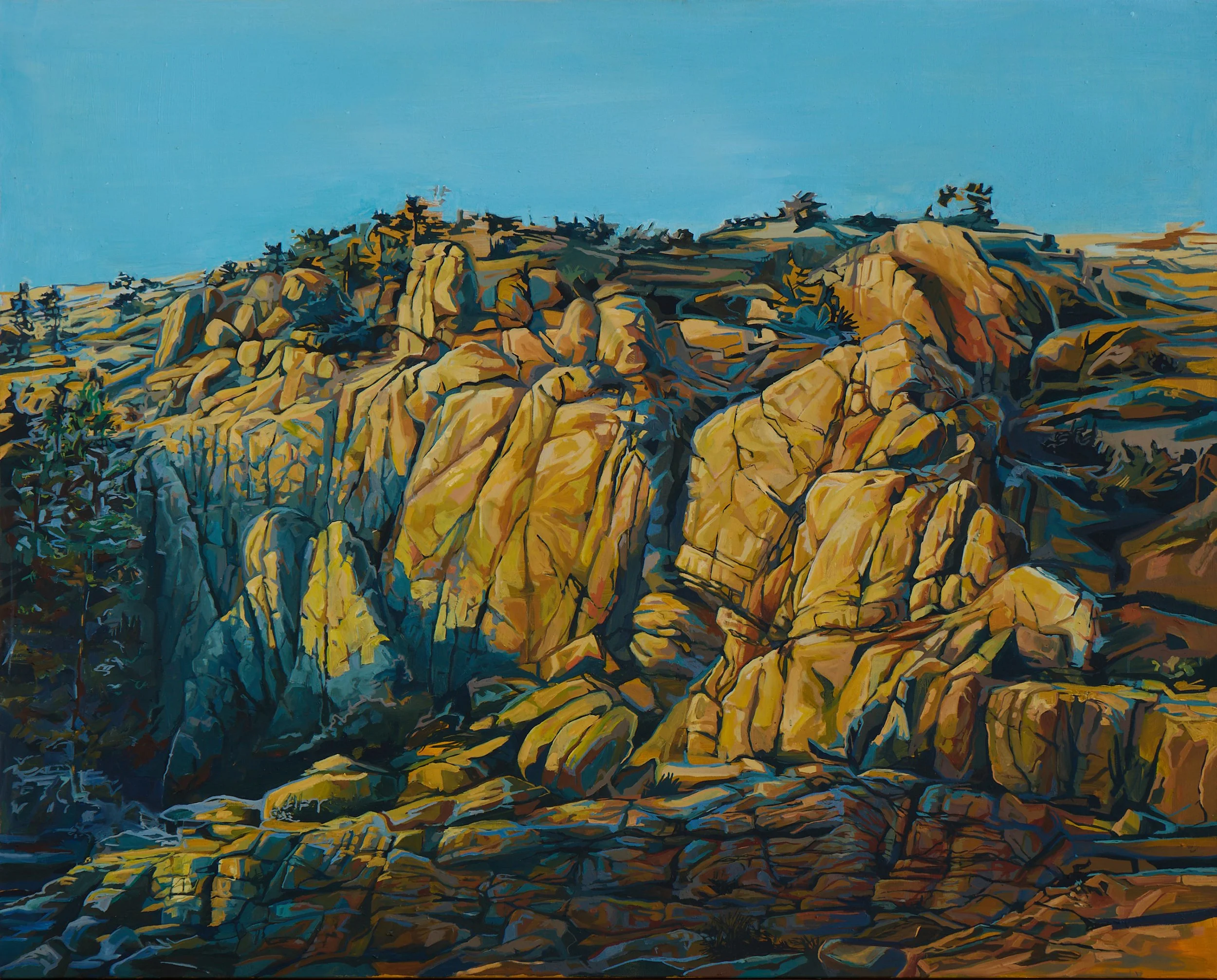
Light.Weight is a new body of oil paintings by Josh Butts, built around the isolated rock formations of Wyoming’s Laramie Mountains - granite outcrops and buttes that stand apart from the land around them, locked in a slow, centuries-long contest with gravity. Formerly exhibited as Grotesque Landscapes, the work has grown into a study of the two forces named in the title, and the interaction between them.
Light is consciousness - the condition under which a form becomes visible, its edges sharpen, its surface gives itself up. Weight is what’s felt before it’s seen: mass, gravity, the strain a body carries whether or not anyone’s watching. Held together, the two words attract and resist each other, the way a burden can be called light, the way distance runners and infantrymen alike carry weight. Butts has lived both sides of that equation — as a Division I and U.S. Army distance runner, and as a combat veteran - it shows up on the canvas as a kind of economy: monumental subjects, rendered in brushwork that have an organized quality - never wasting a stroke.
Working in the tradition of American Regionalists like Thomas Hart Benton and Alexandre Hogue, Butts treats the landscape as design elements, tight, faceted, textured, intentional.
Because he’s colorblind, his color choices track temperature and weight rather than hue, so a painting reads through contrast and mass before it reads through color at all. The result is landscape painting that feels less like observation and more like structural drawing in oil.
Walt Whitman crossed this same ground in 1871 and saw not desolation but design — “the rocks in grotesque shapes, the buttes.” Light.Weight picks up that same correspondence: erosion as a record of endurance, stone as a way of talking about what it costs to hold together under pressure, and what’s left standing once you do.